Permanganate Oxidants
Potassium and sodium permanganate for in situ chemical oxidation (ISCO): the longest-proven oxidant for chlorinated solvents in groundwater, supplied by Hepure in dry, liquid and pre-mixed form, with the quantity estimate to go with it.
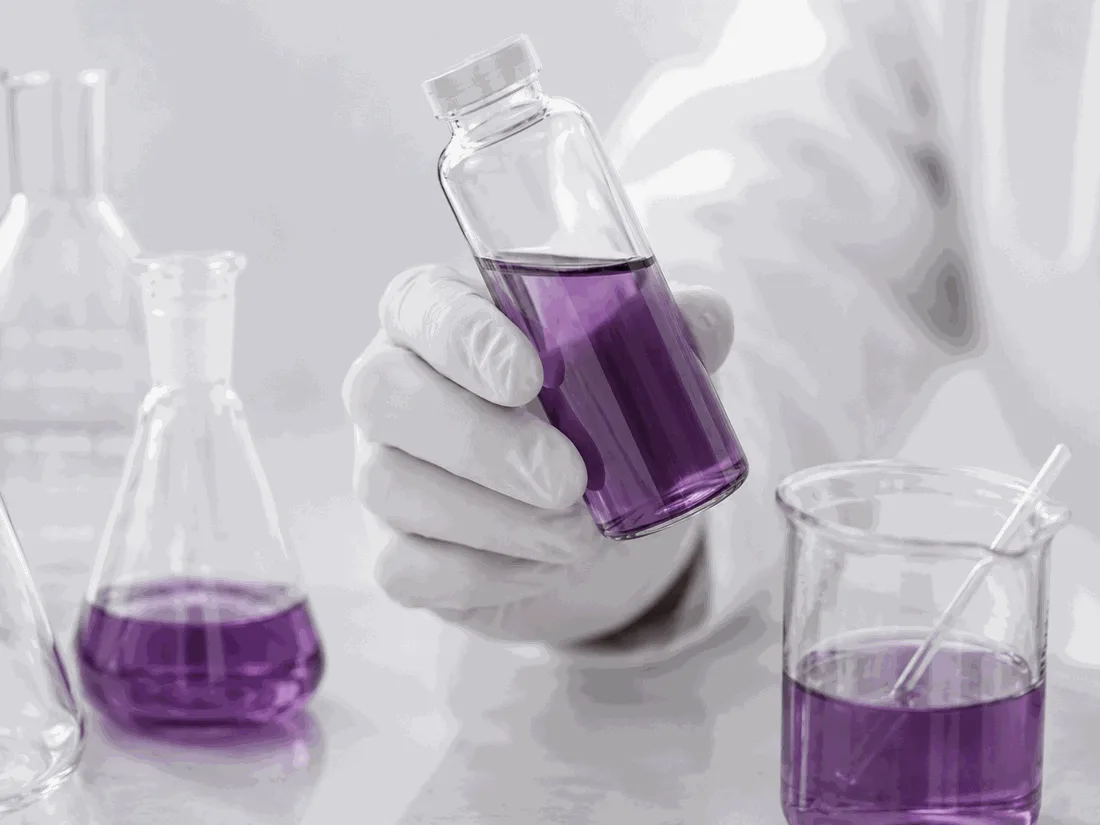
What is Permanganate ISCO?
Permanganate (MnO₄⁻) is the most widely used oxidant for in situ chemical oxidation of contaminated groundwater. Injected into the subsurface, it attacks the carbon-carbon double bond in chlorinated ethenes and other organics and carries them through to carbon dioxide, chloride and manganese dioxide, a harmless mineral solid. There are no chlorinated intermediates: a molecule of TCE oxidized by permanganate does not pass through DCE or vinyl chloride on the way.
Permanganate has been used in environmental remediation for more than two decades. It is valued for persisting in the subsurface for weeks to months, for needing no activator, for working across a wide pH range, and for being visible: the purple front shows up in monitoring wells, so you can see where the oxidant has traveled.
Hepure supplies both forms, potassium permanganate (KMnO₄) and sodium permanganate (NaMnO₄), and both as pre-mixed solutions delivered ready to inject. The chemistry is identical; the choice is about concentration, handling and logistics, and we will give you a straight answer on which fits your project.
Two forms, same chemistry
Sodium and potassium permanganate have equal oxidation potential. The difference is physical form and deliverable concentration, which drives everything downstream: water handling, equipment, logistics and cost. For the detailed side-by-side, see sodium vs. potassium permanganate.
The Workhorse
Dry crystalline solid at about 98% purity, dissolved on site to a practical maximum of around 5%. You control the concentration; you also handle the water and the mixing.
Best for
- Soil mixing and dry blending into excavated or source soils
- Budget-sensitive programs: more oxidant per dollar on a permanganate basis
- Sites with mixing tanks and agitation already on hand
- Lower-concentration injection programs
The Powerhouse
A 40% liquid concentrate that goes from drum to pump to well. Eight times the deliverable permanganate concentration of a potassium solution, so a fraction of the water, storage and labor for the same oxidant mass.
Best for
- High contaminant mass and high oxidant demand sites
- DNAPL source area treatment
- No on-site mixing: ready to inject on arrival
- Space-constrained, indoor or remote projects
How permanganate ISCO works
In situ chemical oxidation with permanganate is a straightforward, well-proven treatment process. Hepure supplies the oxidant and the quantity estimate; your consultant and contractor own the design and the injection.
Site Characterization
Delineate the plume, estimate contaminant mass, and measure natural oxidant demand on site soil at the bench.
Quantity & Form
Convert mass and demand into permanganate quantity; choose KMnO₄, NaMnO₄ or pre-mixed solution to suit the delivery method.
Field Injection
Deliver permanganate into the contaminated zone by direct-push, wells, recirculation or soil mixing.
Monitor & Verify
Track the purple front and contaminant reduction in monitoring wells. Apply additional rounds as needed.
How much permanganate will the site need?
Two numbers add up to the answer: the oxidant the contaminant consumes, which comes from stoichiometry, and the oxidant the aquifer itself consumes, which comes from a bench test. The second is usually the larger.
Stoichiometric demand
Complete oxidation of a chlorinated ethene to carbon dioxide, chloride and manganese dioxide consumes a fixed amount of permanganate per molecule. Fewer chlorine atoms on the molecule means more electrons to remove and more oxidant per pound:
| Contaminant | MnO₄⁻ per molecule | lb KMnO₄ per lb | lb NaMnO₄ per lb (pure salt) | lb 40% NaMnO₄ solution per lb |
|---|---|---|---|---|
| PCE (C₂Cl₄) | 4/3 | 1.27 | 1.14 | 2.85 |
| TCE (C₂HCl₃) | 2 | 2.41 | 2.16 | 5.40 |
| cis-/trans-DCE (C₂H₂Cl₂) | 8/3 | 4.35 | 3.90 | 9.76 |
| Vinyl chloride (C₂H₃Cl) | 10/3 | 8.43 | 7.57 | 18.9 |
Worked example: a plume with an estimated 100 lb of TCE (dissolved, sorbed and any product, not the concentration in one well) needs 100 × 2.41 = 241 lb of potassium permanganate, or about 540 lb of 40% sodium permanganate solution, for the TCE alone.
Natural oxidant demand
Soil organic matter, reduced iron, manganese and sulfide minerals all react with permanganate before it reaches the contaminant. This natural oxidant demand (NOD) is measured on site soil in the laboratory and reported as grams of KMnO₄ per kilogram of soil; values from well under 1 g/kg to more than 20 g/kg are common. Multiplied over the mass of soil in the treatment zone, NOD usually dwarfs the contaminant demand. Continuing the example: a treatment zone of 1,000 cubic yards of soil with a modest NOD of 2 g/kg consumes roughly 6,000 lb of KMnO₄ on its own, 25 times the TCE demand.
Total demand is therefore contaminant mass × stoichiometric ratio + NOD × soil mass in the treatment zone, applied with a safety factor and usually in more than one injection round. We run this arithmetic for customers every week. Send us your numbers and we will return a quantity, a form and a packaging list; we can also supply bench quantities for the NOD test itself.
What can permanganate destroy?
Permanganate is most effective against compounds with carbon-carbon double bonds. Reaction rates rise as the number of chlorines falls, so vinyl chloride reacts fastest and PCE slowest, all within field timescales.
Where permanganate is the wrong tool: it reacts slowly with benzene and other saturated or aromatic hydrocarbons, and not at all with saturated chlorinated compounds such as 1,1,1-TCA, carbon tetrachloride and chloroform. For those, activated persulfate or zero valent iron are the usual choices, and we will say so rather than sell you the wrong oxidant.
Where Hepure permanganate goes
Groundwater and soil remediation
The core use: ISCO for chlorinated solvents in groundwater by injection or recirculation, and dry-blended potassium permanganate for source soils and excavations. Delivery methods include direct injection wells, soil mixing, trench systems and recirculation. See groundwater remediation and soil remediation.
Water treatment
The same oxidant chemistry is used in municipal and industrial water systems to oxidize dissolved iron and manganese for filtration, remove hydrogen sulfide and its odor, pre-treat surface water, and reduce color and organics. Hepure supplies both forms for water treatment; see the water treatment page for the chemistry by water type.
Related reading
Two field articles from the Hepure archive: potassium permanganate at golf courses and zebra and quagga mussel control.
Pre-mixed, site-ready solutions
Both forms are available pre-mixed and delivered at the concentration you specify, which removes on-site dissolving, the exposure that comes with it, and the water logistics. Tell us the target concentration and volume and it arrives ready to inject.
Frequently asked about permanganate
Is sodium or potassium permanganate the stronger oxidant?
Neither. The permanganate ion is the same whichever salt it came from, so oxidation chemistry and reaction rates are identical. The difference is form: a 40% liquid versus a solid that dissolves to about 5%.
Can potassium permanganate be injected directly?
Only after dissolving it. At a practical maximum of about 5%, a potassium permanganate program handles roughly eight times the water of the equivalent sodium permanganate program. That is the main reason sodium permanganate dominates injection work and potassium permanganate dominates soil mixing.
Which is cheaper?
Per pound the two are priced similarly, but potassium permanganate is about 98% active and the sodium product is 40%, so potassium permanganate is usually less expensive per pound of oxidant delivered. Total project cost depends on water handling, mixing equipment, labor, site access and freight (typically 15 to 25 cents a pound depending on volume and distance). Small pails cost more per pound than drums or totes. Ask us for a quote on the actual quantity; that is the only comparison that matters.
How long does permanganate last in the ground?
Weeks to months, depending on natural oxidant demand and groundwater flow. That persistence is what lets it diffuse into lower-permeability zones that faster oxidants never reach.
What happens to the manganese?
Permanganate is reduced to manganese dioxide (MnO₂), an insoluble mineral that stays in the formation. Permeability loss from MnO₂ precipitation is possible in high-demand zones and is accounted for in the injection design.
Is permanganate safe to handle?
It is a strong oxidizer and must be handled with appropriate PPE, proper storage away from organics and reductants, and compatible materials. Follow your site health and safety plan and the product Safety Data Sheet; Pat or Bob can send the current SDS on request.