PFAS “Forever Chemical” Solutions
PFAS has become THE hot topic in remediation. PFAS are a family of man-made chemicals that contain a chain of carbon atoms, fully or partially fluorinated. The most commonly studied are PFOA and PFOS due to their widespread use and persistence.
Why PFAS matters
Due to the strength of the carbon-fluorine bond, PFAS resist degradation in the environment, earning them the nickname “forever chemicals.” This persistence, coupled with their high mobility in water, means that once released, PFAS can travel far from their source and persist for a very long time.
Two things changed the PFAS conversation for site owners. In April 2024 the EPA finalized the first national drinking-water limits for PFAS — 4 parts per trillion for PFOA and PFOS, among the strictest standards ever set — and in 2024 PFOA and PFOS were designated hazardous substances under CERCLA, which brought Superfund liability into the picture. In May 2025 the EPA retained the PFOA/PFOS limits while extending the compliance deadline to 2031 and reconsidering the limits for the other listed compounds. The regulatory detail is on our PFAS remediation techniques page; the chemistry and history are in PFAS: the ubiquitous forever chemicals.
What makes them hard is the same thing that made them useful: the carbon-fluorine bond resists heat, light, biology, and most chemical oxidants. There are thousands of individual compounds, short-chain PFAS are harder to capture than long-chain, and the plumes are mobile. Approaches that work on chlorinated solvents and petroleum mostly don’t work here.
PFAS remediation technologies
We’ll tell you the honest thing before you ask: nothing we sell destroys PFAS in the ground, and nothing anyone sells does — not yet, not at field scale. What works today is capture. Our approach is built on that.
Ex situ, granular activated carbon in pump-and-treat systems is the established, full-scale PFAS treatment. In situ, the field-validated approach is sequestration: injectable colloidal activated carbon deposited on aquifer sediments to form a sorption barrier that stops the plume moving toward receptors — demonstrated in SERDP/ESTCP field validation work, and applicable through existing well screens without trenching. Destruction technologies (thermal, electrochemical, supercritical water oxidation) are advancing but remain pilot-scale in situ, and the reductive pathway on zero valent iron is research-stage; we say so on our own ZVI and PFAS FAQ.
Where Hepure’s range earns its place is the reality of most PFAS sites: the PFAS rarely arrives alone. Fire-training areas, airfields, and industrial sites carry chlorinated solvents, fuels, and metals in the same plume. We supply the carbon for the PFAS fraction and the Ferox zero valent iron, oxidants, and bioremediation amendments for everything else — from one source, designed as one program.
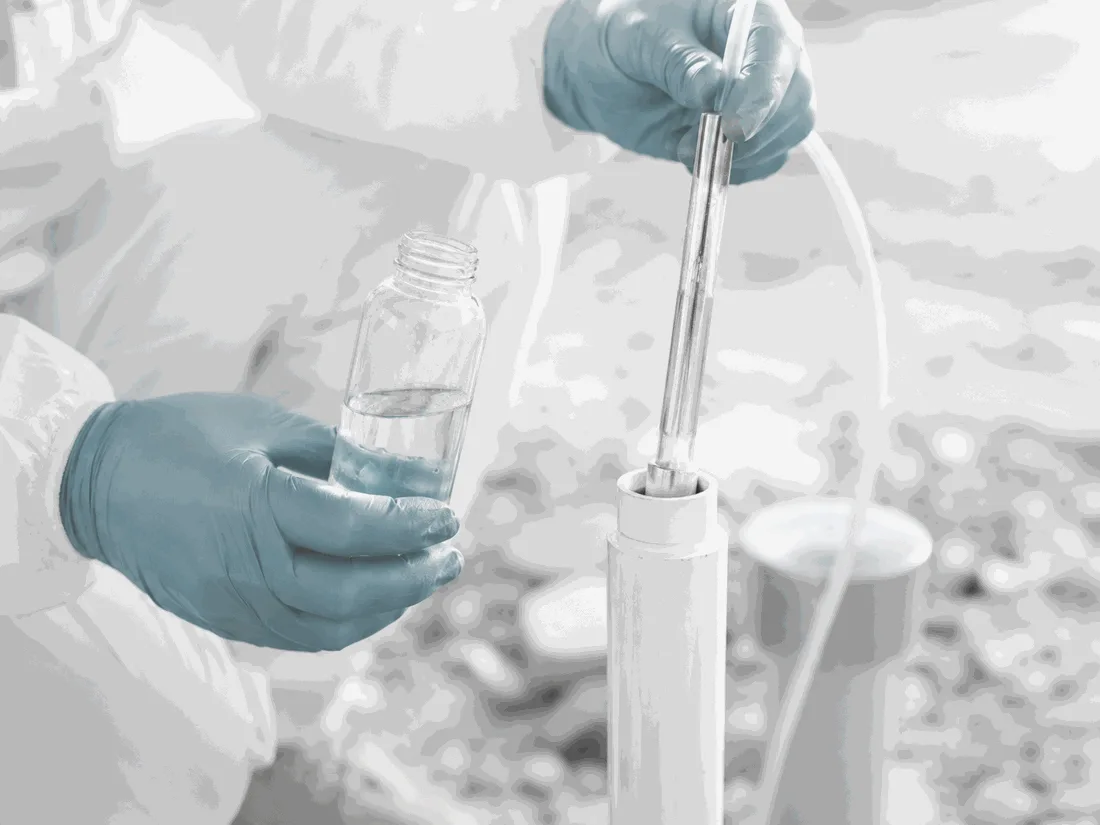
Hepure PFAS Products
Hepure offers colloidal carbon, powdered carbon, and granular activated carbon products for adsorption-based treatment of PFAS in soil and groundwater.
View Carbon Products →Carbon Solutions
Review carbon-based plume stabilization and adsorption strategies for PFAS and other persistent compounds.
View Carbon Solutions →PFAS Remediation Techniques
Separation, destruction, and emerging technologies compared — with the regulatory drivers and how to choose a treatment train.
Read the Guide →Co-Contaminant Treatment
Chlorinated solvents and metals in the same plume as PFAS — treated with Ferox ZVI, oxidants, and amendments alongside the carbon program.
Zero Valent Iron →From site data to a supplied program
PFAS projects reward a plain sequence, and it’s the one we walk through on the phone.
1. Characterize. PFAS analysis is its own discipline — parts-per-trillion sensitivity, thousands of compounds, sample handling that matters. Our article on PFAS detection methods and challenges covers what the data should look like before design starts. Bring the co-contaminant data too; it changes the program.
2. Bench-test the sorption. Carbon capacity is finite and water chemistry shifts it. A bench sorption test on your groundwater turns a dosing estimate into a defensible number — for the carbon mass and for the expected barrier life.
3. Design the delivery. In situ barrier by injection (Fluxsorb RC colloidal carbon), soil and sediment treatment (Fluxsorb RP powdered carbon), or an ex situ system (CarbPure TRA) — often more than one, and often with a ZVI or oxidant component for the co-contaminants. Configuration options are compared on our carbon solutions page.
4. Supply and monitor. Colloidal carbon ships in 275-gallon totes; quantities and lead time follow the design. Sequestration isn’t closure, so the monitoring plan is part of the remedy, not an afterthought.
PFAS, answered
Can PFAS be destroyed in the ground? Not at field scale today. Thermal, electrochemical, and supercritical-water methods have shown near-complete destruction in lab and pilot settings; in situ, the validated approach is sequestration on activated carbon. We’ll tell you when that changes.
What about the solvents and metals in the same plume? That’s where a one-source program helps: Ferox zero valent iron for the chlorinated solvents and metals, carbon for the PFAS, designed together. See why co-mingled plumes favor in situ approaches.
What’s the first step? Send us the site assessment — PFAS results, co-contaminants, hydrogeology. Call 866-727-4776 (Pat Randall x1, West; Bob Kelley, Ph.D. x2, East) or request a PFAS consultation. The costs of colloidal, powdered, and granular carbon are compared in our colloidal carbon FAQ.