Ferrous Sulfate
Hepure is a premier ferrous sulfate supplier for environmental remediation, providing ferrous iron (II) sulfate for in situ chemical reduction and Fenton’s chemistry applications.
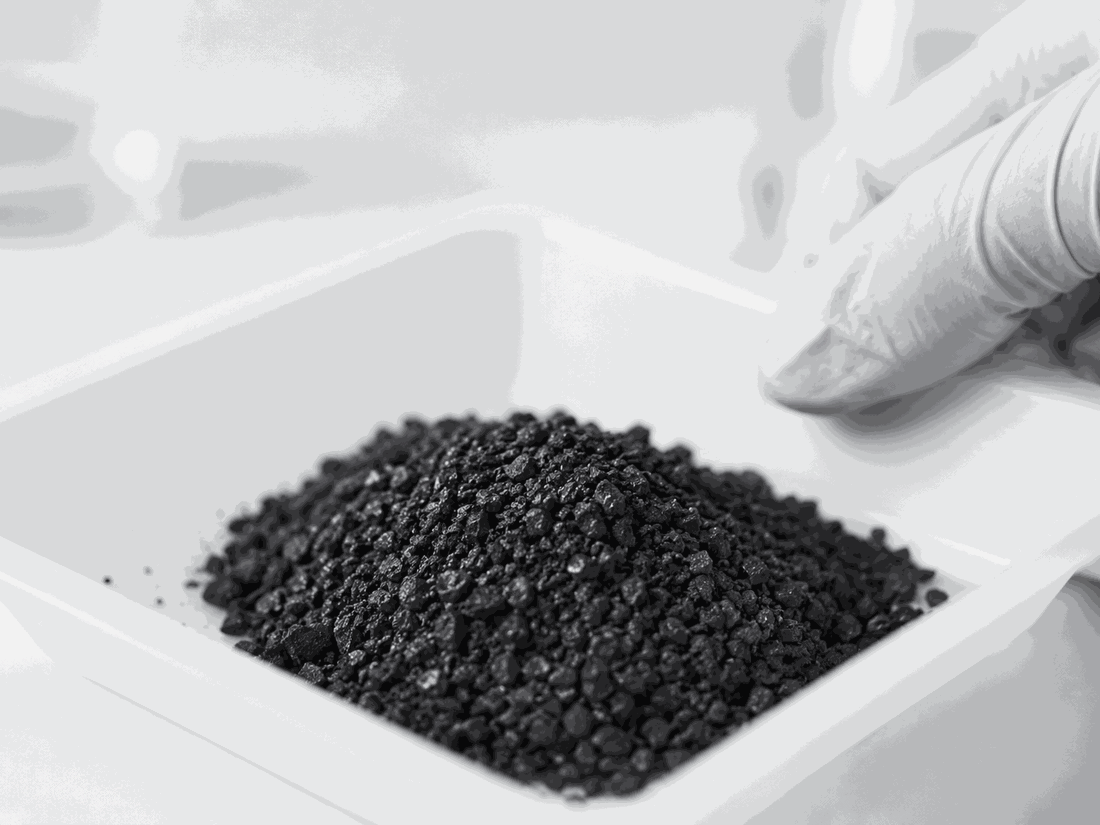
Buying Ferrous Sulfate for a Remediation Project
Most ferrous sulfate calls we take fall into one of two buckets. Either a consultant has a treatment design that calls for ferrous iron — a Fenton’s program, a persulfate activation, a chrome reduction — and needs a dependable source with a certificate of analysis. Or a project’s usual supplier fell through, and somebody needs material on site without blowing up the schedule. We’ve been the answer to both since 1994.
Hepure supplies remediation-grade ferrous sulfate in 50 lb bags, delivered through distributor relationships positioned across the United States — which usually means a shorter freight run and a better rate than a single-warehouse supplier can offer. If your design specifies a particular hydrate form or iron content, send the spec with your request and we’ll confirm it against the CoA before anything ships.
The formula, for those checking their spec
Ferrous sulfate — iron(II) sulfate — is FeSO4. Commercial material is hydrated, written FeSO4·xH2O. The heptahydrate, FeSO4·7H2O, is the familiar blue-green crystal and the most common commercial form; a monohydrate is the drier, more concentrated-by-weight alternative. The form and assay that ship with your order are stated on the certificate of analysis — if your dosing math assumes a specific hydrate, tell us and we’ll match the paperwork to the math.
Three Jobs Ferrous Sulfate Does on a Site
1. Catalyzing peroxide. Ferrous iron is the classic Fenton’s catalyst: Fe²⁺ plus hydrogen peroxide generates hydroxyl radicals, the most aggressive oxidizing species commonly used in remediation. If you’re quoting peroxide for a source zone, quote the iron with it — a peroxide program without its catalyst plan is half a design.
2. Activating persulfate. Ferrous iron is one of the standard activators for sodium persulfate ISCO. Ordering both chemistries from one source keeps the ratios, the delivery schedule, and the responsibility in one place.
3. Reducing and stabilizing metals. As a source of reducing iron, ferrous sulfate supports in situ chemical reduction — most prominently converting hexavalent chromium to its far less mobile trivalent form — and helps establish the reducing conditions that anaerobic bioremediation programs depend on. For broader metals work, see our metals treatment overview.
Ferrous Sulfate for Water and Wastewater Treatment
Ferrous sulfate supplies ferrous iron, and in water treatment that iron does two jobs. It reduces oxidized contaminants, hexavalent chromium above all. Then, oxidized to ferric iron, it forms floc that carries chromium, arsenic, and other contaminants out on a clarifier or filter.
Industrial Wastewater
Chromate stays dissolved at any pH you’d run a clarifier, so Cr(VI) has to be reduced to Cr(III) before it can precipitate. Ferrous sulfate makes that reduction across a wide pH range, including near neutral, so reduction and precipitation can share a tank. Sodium bisulfite, the traditional alternative, works fast but needs pH 2 to 3. The trade-off is sludge: every pound of iron adds nearly two pounds of ferric hydroxide solids, dry basis. Stoichiometry calls for 3.2 mg of iron per mg of Cr(VI), and practice runs higher.
Ferrous sulfate is also the standard catalyst for hydrogen peroxide in Fenton’s treatment of phenols and other organics that resist biological treatment. Order both together and the ratios arrive as one shipment.
Mine Water
When ferrous iron oxidizes in a treatment train, the ferric hydroxide it forms adsorbs and co-precipitates arsenic, and the same iron reduces any hexavalent chromium present. More on the chemistry: arsenic and hexavalent chromium.
Drinking Water
California’s 10 µg/L hexavalent chromium MCL names reduction-coagulation-filtration among its best available technologies, and ferrous iron drives it: ferrous sulfate reduces Cr(VI) to Cr(III), the iron oxidizes to ferric hydroxide, and the chromium comes out with that floc on the filter. Our 50-lb bags suit wellhead-scale feed systems; larger continuous plants typically buy liquid ferrous in bulk.
Supplying Ferrous Sulfate for Water Treatment
We ship ferrous sulfate in 50-lb bags, with the hydrate form and assay stated on the certificate of analysis. If your dosing math assumes the heptahydrate or the monohydrate, tell us and we’ll match the paperwork to it. See all Hepure water treatment chemicals.
What to Have Ready When You Request a Quote
You don’t need all of this to start the conversation — but the more of it you have, the faster we can turn a real number:
- Quantity — pounds of product or mass of iron your dosing calls for. If you only have contaminant concentrations and treatment volume, that’s fine: quantity estimation is part of what our technical team does.
- The chemistry it’s serving — Fenton’s catalyst, persulfate activation, or metals reduction. It changes what we flag before shipping.
- Site location and receiving constraints — dock or no dock, liftgate needs, laydown space.
- Timeline — mobilization dates drive freight decisions more than anything else.
Call 866-727-4776 — Pat Randall (x1) covers the West, Bob Kelley, Ph.D. (x2) covers the East — or send the details through our contact page and we’ll come back with pricing and lead time.
Common Questions
Is ferrous sulfate the same as ferrous sulphate? Yes — same compound, British spelling. Spec sheets from overseas suppliers often use the “sulphate” form; the chemistry doesn’t change.
Can I use ferrous sulfate alone as a treatment? Occasionally — some metals work is straight chemical reduction. But most of what we sell rides shotgun with another chemistry: peroxide, persulfate, or an electron donor. If you’re not sure your design needs it, that’s a five-minute phone call, not a purchase order.
Do you supply outside of environmental remediation? Yes. Besides remediation, we supply ferrous sulfate for water and wastewater treatment; see water treatment uses above. If your application is something else, call anyway and we’ll tell you straight whether we’re the right source or point you somewhere better.
Request More Information
Contact our technical team for product specifications, custom quotes, and site-specific guidance.
Contact Us →