Iron Pyrites
Hepure supplies iron pyrites (iron II disulfide, FeS2) as a reactive mineral for in situ chemical reduction. It is the sulfide-based counterpart to our Ferox zero valent iron, used where a site calls for sulfide chemistry, a longer-lasting reductant, or a reactive barrier medium.
Overview
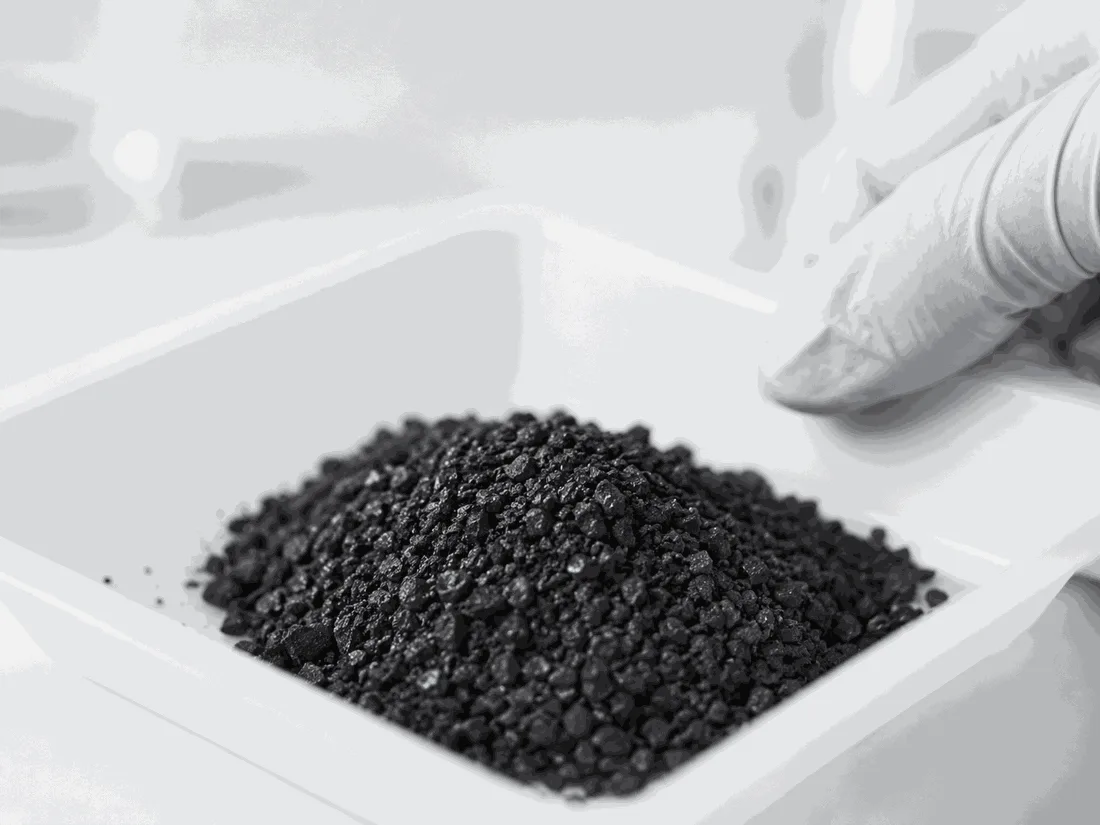
Iron pyrite is the most common iron sulfide mineral: one iron atom bound to two sulfur atoms, FeS2. In the ground it is a reductant. Both the ferrous iron and the disulfide can give up electrons, which is what makes the mineral useful for treating oxidized contaminants in groundwater. The pyrite Hepure distributes is a pure, finely grained, mono-crystalline product, supplied as a mineral powder or granule for direct placement or injection; custom sizing is available.
Most of our customers know us for zero valent iron, and the two products are relatives. Both are solid-phase reductants that work by surface contact rather than by dissolving into the aquifer, both keep working for years rather than weeks, and both are placed where the plume will reach them. Pyrite is the choice when a project specifically wants sulfide chemistry, or when ZVI alone is not the right fit.
How Pyrite Treats Contaminants
Pyrite is an electron source. When an oxidized contaminant meets the mineral surface, the contaminant is reduced and the pyrite is slowly consumed in its place. Two groups of contaminants are well documented in the published literature:
Chlorinated solvents
Laboratory studies have shown that pyrite dechlorinates chlorinated ethenes such as PCE and TCE by reductive elimination, the same family of pathways that makes zero valent iron effective. The reaction products stay largely bound to the hydrophobic sulfide surface rather than diffusing back into the groundwater, and the dechlorination rates per unit of surface area are fast enough for soil and groundwater remediation. Like ZVI, pyrite does not rely on the stepwise biological sequence that can stall at vinyl chloride.
Hexavalent chromium and other oxidized metals
Pyrite reduces chromate (Cr(VI)) to the far less mobile Cr(III), which precipitates as hydroxide. In practice this makes pyrite a candidate medium for hexavalent chromium plumes, either placed as a barrier or blended with ZVI. Published work also describes pyrite reducing other oxidized species, including nitrate and selenate, under the right conditions. For metals that precipitate as sulfides, the sulfide released as pyrite reacts can contribute to immobilization in the same way our Remotox calcium polysulfide does.
Where it fits alongside ZVI
- Reactive barriers. Pyrite is a dense, durable medium with a long reactive life, which suits permeable reactive barrier construction and blended ZVI/pyrite barriers.
- Sulfide-driven chemistry. Sites where sulfide precipitation of metals is the objective, or where the geochemistry already favors a sulfidic environment.
- Buffering ZVI. Pyrite oxidation generates acidity; ZVI corrosion generates alkalinity. Blended media have been used in the literature to keep pH in a range where both stay reactive.
Handling and Safety
Pyrite is stable under normal storage conditions. It is incompatible with oxidizing agents, so it should not be stored or mixed with permanganate, persulfate, or peroxide. Hazardous decomposition products include iron oxides and sulfur oxides, including sulfuric acid. Keep it dry and out of prolonged contact with air: exposed to oxygen and water, pyrite slowly oxidizes to ferrous iron and sulfate and releases acidity (the same chemistry behind acid mine drainage), which is why it performs as intended in anaerobic aquifers and should be kept sealed until placement.
Consult the Safety Data Sheet and your site health and safety plan before handling. Pat or Bob can send the current SDS on request.
Packaging and Delivery
Iron pyrite is available in 50 lb paper bags, 2,000 lb supersacks, or bulk truck for large barrier installations. All packaged product is loaded on pallets and stretch wrapped for shipment. As with our ZVI, small quantities for bench testing are available before a project commits to a full order.
Frequently Asked Questions
Is iron pyrite the same as zero valent iron?
No. Zero valent iron is metallic iron (Fe0); pyrite is an iron sulfide mineral (FeS2). Both are solid reductants that treat chlorinated solvents and oxidized metals by surface reaction, but pyrite brings sulfide to the reaction and generates acidity as it oxidizes, where ZVI generates alkalinity. They are often considered together, and sometimes blended.
What contaminants can pyrite treat?
Chlorinated ethenes (PCE, TCE and their daughter products) and hexavalent chromium are the best documented. Nitrate, selenate and several metals that form insoluble sulfides have also been reduced or precipitated by pyrite in published studies. Whether it is the right reductant for a specific site depends on the contaminant mix and groundwater chemistry; send us the site data and we will tell you honestly whether pyrite, ZVI, or a blend makes more sense.
Does pyrite react with oxidants?
Yes, readily. Keep it well away from permanganate, persulfate and hydrogen peroxide in storage and in the ground. A site that has recently been treated with an oxidant should be allowed to return to reducing conditions before a pyrite or ZVI placement.
How is it ordered?
Call Pat Randall (West, x1) or Bob Kelley (East, x2) at 866-727-4776, or send a request with the quantity you expect, the delivery location and the form you need. We quote freight with the material so there are no surprises on delivery.
Request More Information
Contact our technical team for product specifications, custom quotes, and site-specific guidance.
Contact Us →