In Situ Groundwater Remediation
The chemistry for treating contaminated groundwater in place: oxidants, zero valent iron, bioremediation amendments and activated carbon, supplied by Hepure since 1994 and matched to the contaminant and the aquifer you are working in.
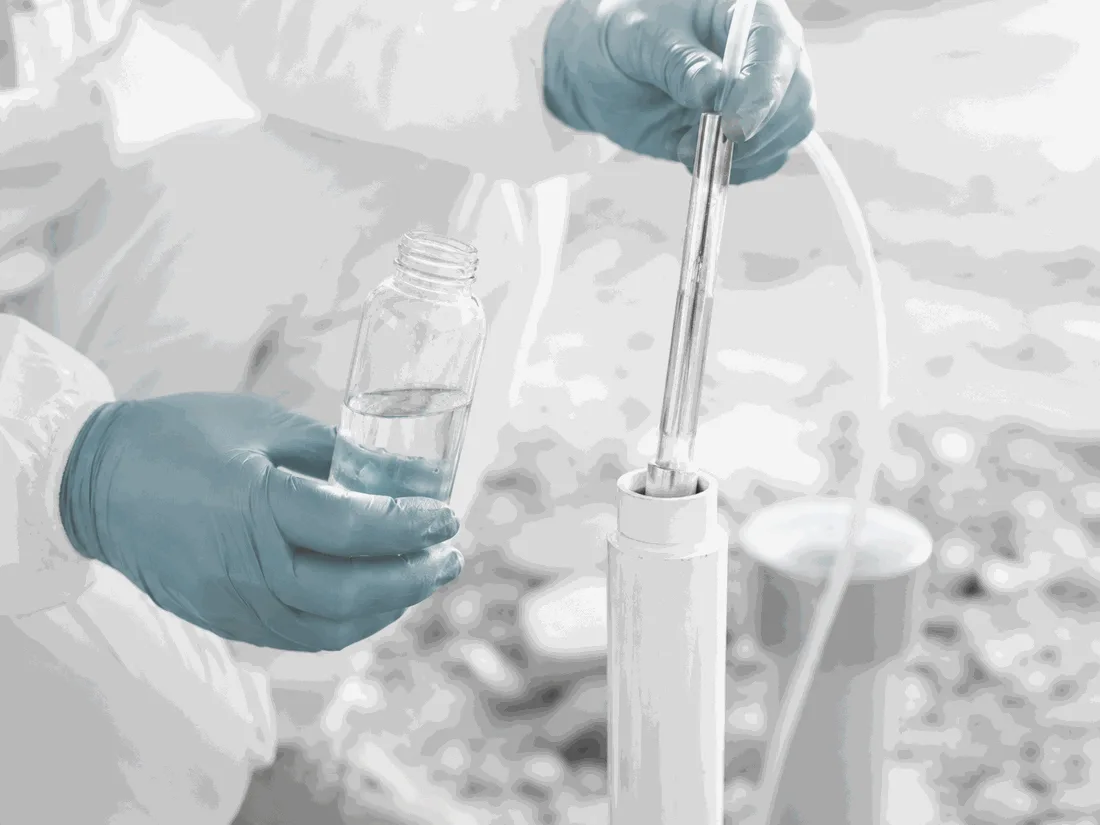
Treating groundwater where it sits
In situ groundwater remediation treats contaminated groundwater directly within the aquifer. Instead of pumping water to the surface, reagents are delivered into the subsurface to destroy, transform or immobilize the contaminants in place. Compared with pump-and-treat, in situ methods are usually less costly, faster to implement, better suited to long-term plume management and far less disruptive to a working site. That is why they have become the default approach for most groundwater cleanups in the United States.
Hepure’s role is the chemistry. We supply the oxidants, reductants, electron donors and carbon that in situ programs are built on, and we have been doing it long enough to know which product tends to work in which setting. The engineering of a remedy belongs to your consultant; what follows is the supplier’s view of how the four families of treatment chemistry differ and where each has earned its place.
Best Fit
Dissolved plumes, source zone mass reduction, PFAS stabilization and long-term plume control.
Typical Goals
Destroy, reduce, biologically degrade or adsorb contaminants directly within the aquifer.
What the site tells you before the chemistry does
Every in situ reagent works under some conditions and not others. Before anyone picks a product, these are the things we ask our customers about, because they decide most of the answer:
- Aquifer type. Most contamination sits in shallow perched zones that hold little water; occasionally it reaches a deeper aquifer used for supply. Depth to be treated, water quality (hardness, mineral content) and permeability all shape what can be delivered and how far it will travel.
- Geology. Groundwater moves through everything from fractured bedrock to heavy clay. The geotechnical picture decides whether a reagent can be injected, mixed or placed in a trench, and how evenly it will distribute.
- Contaminant. Chlorinated solvents (CVOCs), petroleum hydrocarbons, metals, inorganics, pesticides, PAHs and PFAS each respond to different chemistry. Some pairs can be handled by one technology (CVOCs and metals by ZVI, for example); others need entirely different approaches.
- Concentration and mass. Some reagents work best on low dissolved concentrations; others are built for high mass and free product such as DNAPL. The quantity of reagent scales with contaminant mass, so an honest mass estimate matters more than the concentration in any one well.
- Remedial goals. Reaching drinking-water standards and polishing a plume for closure call for very different amounts of chemistry and time.
- Groundwater chemistry. The most overlooked parameter. pH, conductivity, hardness, sulfate, nitrate, dissolved oxygen, manganese, calcium and natural organic matter are not contaminants, but they consume reagent and can interfere with a remedy. Natural oxidant demand, in particular, often exceeds the demand of the contaminant itself.
These factors are normally collected in a site assessment. If you send us yours, we can tell you which products are candidates and roughly how much of each the site would consume.
Core In Situ Remediation Technologies
In Situ Chemical Oxidation (ISCO)
ISCO uses injected oxidants to chemically destroy organic contaminants in groundwater.
- Oxidants we supply: potassium permanganate, sodium permanganate, sodium persulfate (activated) and hydrogen peroxide.
- Best applications: chlorinated ethenes (PCE, TCE, DCE, vinyl chloride), petroleum hydrocarbons and BTEX, PAHs, and source zones that need rapid mass reduction.
- Key advantages: fast destruction, effectiveness at high concentrations and flexible delivery (injection, soil mixing, recirculation).
- Which oxidant: permanganate is the workhorse for chlorinated ethenes and persists in the subsurface for weeks to months without activation. Activated persulfate and peroxide are the usual choices for petroleum hydrocarbons, PAHs and compounds permanganate reacts with slowly. Full oxidant line: chemical oxidants.
In Situ Chemical Reduction (ISCR)
ISCR uses reducing agents to transform contaminants into less harmful compounds.
- Primary reagent: zero valent iron (Ferox ZVI).
- How it works: ZVI drives abiotic reduction at the iron surface, dechlorinating solvents without the DCE and vinyl chloride daughter products that a stalled biological sequence leaves behind, and reducing soluble metals.
- Applications: CVOCs, hexavalent chromium and other soluble metals, and anions such as nitrate and sulfate.
- Deployment: injected as Ferox Flow or Ferox Target powders, placed as a permeable reactive barrier with granular Ferox PRB, or combined with electron donor as Ferox Plus (eZVI).
- Performance: passive, long-term treatment, typically 3 to 15+ years from a single placement, and not consumed by soil oxidant demand the way oxidants are.
- Other reductants: Remotox calcium polysulfide for chromium and metals stabilization; iron pyrites where sulfide chemistry or a very durable barrier medium is wanted.
Enhanced Bioremediation
Bioremediation feeds the microbial processes that already exist in the aquifer so they degrade contaminants faster.
- Anaerobic: for chlorinated solvents. Emulsified vegetable oil (EVO) and sodium lactate supply the hydrogen that reductive dechlorination runs on; EVO is slow-release and lasts years, lactate is fast-acting and short-lived.
- Aerobic: for petroleum hydrocarbons and BTEX. Calcium peroxide releases oxygen, which is usually the limiting factor, over months; low-strength hydrogen peroxide is used where a quicker oxygen pulse is wanted.
- Key advantages: low cost per pound of contaminant, sustainable, and well suited to polishing a plume or holding it before monitored natural attenuation. The full line is on the bioremediation amendments page.
Adsorption (PFAS and recalcitrant compounds)
Some contaminants, PFAS above all, do not readily degrade chemically or biologically. Activated carbon placed in the aquifer forms an adsorption zone that captures them as groundwater flows through.
- Products: Fluxsorb RC colloidal carbon for injection into the plume and CarbPure TRA activated carbon for ex situ water treatment and barrier applications. See carbon solutions.
- Best applications: PFAS plume stabilization, long-term risk reduction and sites that need exposure control now while a source remedy proceeds.
Which chemical for which problem
| Contaminant | Usual chemistry | Hepure products |
|---|---|---|
| Chlorinated ethenes (PCE, TCE, DCE, VC) | Abiotic reduction, permanganate ISCO, anaerobic bio | Ferox ZVI, permanganate, EVO, lactate |
| Chlorinated ethanes, carbon tetrachloride, chloroform | Abiotic reduction, activated persulfate | Ferox ZVI, persulfate |
| Petroleum hydrocarbons, BTEX | Activated persulfate or peroxide ISCO, aerobic bio | persulfate, hydrogen peroxide, calcium peroxide |
| Hexavalent chromium | Reduction to Cr(III) and precipitation | Remotox, Ferox ZVI, ferrous sulfate, iron pyrites |
| Arsenic, lead, selenium and other metals | Reduction, sulfide precipitation, sorption to iron | Ferox ZVI, Remotox, ferrous sulfate |
| Nitrate, sulfate | Abiotic reduction, anaerobic bio | Ferox ZVI, EVO |
| PFAS | Adsorption and containment | Fluxsorb RC, CarbPure |
| Low pH, alkaline activation, pH control | Base addition | sodium hydroxide |
Combining technologies
Most sites that close on schedule use more than one of these. A common pattern: an oxidant or ZVI for rapid mass reduction in the source area, an electron donor or a ZVI barrier for long-term plume management, and carbon where a receptor needs protecting while the rest does its work. The reagents have to be sequenced sensibly (an oxidant placed into a zone that was just made reducing will spend itself on the reductant, not the contaminant), and that is part of what we talk through with every order.
Why in situ? It treats contamination at the source, lowers lifecycle cost, keeps the site operating, and scales from a single injection point to a full barrier. The chemistry is proven; the work is matching it to the site.
Common Questions
How much reagent will a site need?
It depends on contaminant mass, treatment volume and the aquifer’s own demand (natural oxidant demand for ISCO, competing electron acceptors for bioremediation, flow and residence time for a barrier). Send us the site data and we will give you a quantity estimate and the packaging that fits it.
Oxidize or reduce a chlorinated solvent plume?
Both work. Permanganate destroys PCE and TCE quickly and is the usual pick for hot spots and source zones; ZVI is slower per pound but keeps working for years, does not generate daughter products, and is not consumed by soil demand, which makes it the usual pick for barriers and long plumes. Many sites use permanganate in the source and ZVI or EVO downgradient.
What does Hepure do and not do?
We supply the chemistry, verify its quality, quote freight with the material, and share what we have seen work. We do not design remedies or run injections; your consultant or contractor does that, and we are happy to work directly with them.
Request More Information
Send us your site assessment and we will tell you which products are candidates and roughly what the site would consume.
Contact Us →